


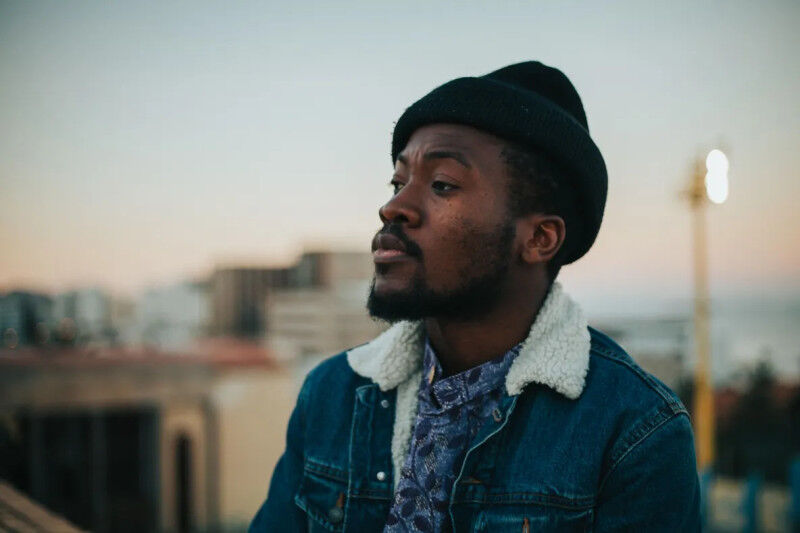
In the latest instalment of our Alumni Spotlight series, we speak to multi-award-winning MC, music producer, and songwriter MuRli, or Mawuli Boevi. MuRli has won international acclaim with his band, Rusangano Family, and for his work with artists including God Knows and Denise Chaila.
MuRli is a graduate of the BSc in Music, Media and Performance Technology and makes a proud return to UL through his work on the soundtrack for the upcoming UL Sport promotional video.
Can you tell us a bit about yourself?
I was born in Lomé, the capital city of Togo. I moved to Ireland at the age of 12 and went to school in CBS Sexton Street, Limerick, where I was privileged to receive a JP McManus Scholarship after my Leaving Cert. It was while there that I first got to visit University of Limerick, through the Student Ambassador Programme.
I was always surrounded by music growing up. My dad is a big music fan, and from a young age I remember sitting as close as I could to the speakers in our living room, as if I was trying to capture every decibel for myself. I was exposed to almost every style of popular music imaginable. While at CBS, I became a bit obsessed with rap music, thanks (or blame) to my best friend at the time, who somehow had access to every new release. He’d lend me his CDs, and I’d spend every evening memorising bars. Before long, I’d started writing my own.
Why did you choose the BSc in Music, Media and Performance Technology at UL?
In a sense, one could say I actually chose UL before I chose a course. When it was time to go to college, I wasn’t particularly keen on adventure. I wanted somewhere close to home and to my friends, so UL was already leading the race. After visiting the campus a few times while I was still in school, I knew what my first-choice university would be.
It was a little more complicated figuring out what I wanted to study, because at the time there wasn’t a dedicated music degree at UL. The nearest thing was Music, Media and Performance (MMPT), and once I saw the word ’music’, I was sold.
What did you enjoy most about the course?
What I enjoyed most about the course was the world it opened my mind to. It wasn’t a music course in the sense I had expected. It leaned more towards computer science but I ended up discovering the world of digital arts and developing a deeper understanding of sound and how to manipulate it to various effects.
I didn’t make much use of the recording facilities outside of group projects. The software I learned to use there, however, has been hugely beneficial. I still rely on some of it to this day. I’ve also collaborated with other past students of the course later in my career, though not yet with anyone from my own year. I’m still only getting started though, so there’s time for that.
What are some of your favourite memories of studying at UL?
Some of my favourite memories are of myself and some friends starting up a dance society in UL. We went on to win the Intervarsities the following year. I had the best time dancing there. For a while, I actually thought I might end up being a professional dancer. But by the time I graduated, music had returned to the fore.
I remember one occasion when a band from Shannon, whom I used to record in my flat, won a competition and part of the prize was a recording session in the CSIS studio at UL. It was, if I remember right, their first session in a professional studio, and the engineer that day was none other than my lecturer, Giuseppe Torre. It felt like a glimpse into the future, and funnily enough, I’ve just produced an album for one of the members of that same group, God Knows’ A Future of the Past . We talked about that session for years and dreamed that it would be our future.
Another highlight was being a Student Ambassador and a mentor through the UL Access Programme. I made some of my best friends there. And I can’t forget my early morning workouts in the Arena. Those really were the good times.
Can you tell us about your Co-Op experience and your Final Year Project?
For my Co-Op, I worked for a Limerick-based media company, Éiremedia, as a video editor. That gave me access to a lot of local cultural events and exposed me to the wealth of talent here in the city.My Final Year Project was a short documentary film exploring the artistic practice of social commentary through documentary. I based it around a Christian group who organised an outreach in Moyross, on the northside of Limerick, at the time, documenting the events and their impact on the local community through the lens of a local rapper.
Are there any lecturers who inspired you during your time at UL?
I look back on my first couple of years in college and I can’t help but feel like I was a bit too young in mind, so I didn’t fully grasp the scope of what I was doing until after my Co-Op. On my return, one lecturer who really made a difference for me was Dr Nicholas Ward. He had a way of making complicated topics seem simple, and that completely changed my outlook on the course. That module was crucial and made me appreciate the course so much more, so thank you, Nick.Were you a member of any clubs and societies? If so, tell us about your experience.
I was a member of Dance UL, and I excelled to the point of considering a career in dance. I was a member of the Music Society as well, though I feel I didn’t make the most of it. I definitely joined about half a dozen clubs and societies but I wasn’t able to keep up with most, and I eventually settled for those two and Capoeira.
Tell us about your own career journey so far?
My career so far has taken me to places I could only have dreamed of as a student. My band Rusangano Family made a bit of history by winning the Choice Music Prize Irish Album of the Year in 2017, a feat I still find hard to believe. We were the first rap group to win it, and I was blessed to tour around the world, play unbelievable shows, and share stages with some incredible artists.When we parked the Rusangano train, I produced Denise Chaila’s debut mixtape Go Bravely , which also won the Choice Music Prize for Album of the Year in 2021. That project opened new doors for me and brought me a step closer to living every musician’s dream, to do what we love for a living.
My latest work, which I’m very proud of, is producing God Knows’ debut album, A Future of the Past , a record I truly believe will be studied in years to come.
All that said, I still haven’t released a solo album. A couple of EPs later, I’m finally in the studio making that dream a reality, so that’s to be continued.
How did your UL course and your overall UL experience prepare you for entering the world of work and the music business upon graduating?
One of the biggest things I learned in UL was discipline, and the value of the work done behind closed doors. I learned a lot through hours of self-directed study, research, and reflection, and I came away with a professionalism that’s served me well ever since.
Another key skill I’ve picked up is critical thinking. I make consequential decisions every day, and it’s important not to jump at every opportunity that looks good on the surface. Reading and reading between the lines is essential.
As I now co-run a music label, informed decision-making is vital, and I think I owe, at least, a bit of that to my years in UL. All those college projects made me a better project manager, communicator, and collaborator, skills that are indispensable in the music industry.
What has been your career highlight so far?
Winning the Choice Music Prize with Rusangano Family is still the standout moment for me. I’ve had bigger moments since, but for that album to be immortalised in that way is something I dearly cherish. Even if just one more person discovers it each year during Choice Prize season, that’s enough. It’s a seminal work, and I’m proud it sits among other monumental records in Irish music history.Here at UL, we encourage our students to ’Stay Curious’. What keeps you curious and how important has curiosity been in your work?
I’m a naturally curious person, and because of the oratorical nature of the music I make, I’m often led to research deeply so that what I say through my craft is grounded in fact. That means hours of podcasts, sermons, documentaries, books, films, music, and music, and more music.
More recently, travel has become a big source of inspiration. Seeing more of the world broadens your perspective and helps you embrace change. The music I produce is driven by curiosity; without it, I simply couldn’t create.
What advice would you give to anyone considering applying for the BSc in Music, Media and Performance Technology at UL, and what career pathways can they expect?
If you’re curious about the technology at the heart of music and digital arts, start by writing down the questions you have right now. Compile them and email the course director. Make sure you understand the core modules to see if it suits you, because that’s what will sustain your interest.
It’s a really cool course, but it’s still a university course so you’ll need to put in work. When you’re done, you can shape your own career path in the image of what MMPT would offer for you, be it developing your own instruments, producing the next chart-topping artists, working behind the scenes of your next favourite TV show or film, a sound engineer in music venues or in recording studios, or it could also be a gateway to you entering into the computer science world. T he possibilities are endless in a world that’s becoming more and more digital.
As an internationally recognised artist, what do you make of the local scene now in Limerick? How have you seen things evolve since you started out?
The local scene in Limerick is the Irish music industry’s secret weapon, whether it knows it or not. Limerick has produced global superstars throughout the years and although the city may not always be heralded for it, it’s undeniable, for anyone who’s observed the local scene over the last decade even, that there is something in the water here. The grass just might be greener, if we continue to water it. That "watering," however would require support, from both audiences and local stakeholders because the last thing we want is a city that produces exports, at the expense of its local scene.
I am excited at what the next generation of tastemakers will bring. There’s a real sense of something bubbling again and bit by bit, I feel we’re overcoming the slump of the post-pandemic hangover, so I’m optimistic.
I strongly believe that artists can be based here in Limerick and still work internationally. It’s all down to the quality of work we make and the infrastructure. In a more and more expensive world, home is where it’s at right now if you ask me, so I have no plans to move anytime soon.
We’re seeing more exciting acts and events in local venues, which justifies further investment in the arts. The more that happens, the stronger the reason for talent to stay rooted here. It’s everyone’s responsibility to keep pouring into our city.
Tell us about your involvement with the latest UL Sport promotional video.
It was a pleasure to be part of this production. From the outset, I knew it would be an exciting project. Although I had soundtracked video projects in the past, this was the first time I would be working with sounds from people and their surroundings, developing them into a cohesive track that tells its own story.It was challenging at times, but that’s where the magic lies. I’m delighted with the result, and it’s been wonderful to collaborate with everyone involved. A special mention to the athletes, who truly gave us a glimpse of what high performance looks like. I’m looking forward to seeing them all soar in their fields.
What are your hopes and plans for the future?
Right now, my hope is to make groundbreaking work again, whether that’s my own solo debut or the collaborations I’m currently working on. I want my upcoming releases to be life-affirming, to open more doors for dreamers like me, and to take Limerick to the world on an even bigger scale.
After that, I’d love to buy a lovely house in the countryside, start a family, and maybe a little farm. The music won’t be stopping anytime soon, though, I’m praying for bigger dreams and aiming never to become complacent. And if somewhere along the way I can continue to inspire the generations to come then, I’d be doing more than a few things right.
Anything else you would like to say that we didn’t ask you about?
I’d love to give a big shout-out to the UL Access Office, who were really there for me and so many others throughout our time at UL. It was a beautiful community, and I want them to know they made a difference, not just for me, but for a lot of students.