


news
Life Sciences
Results 1 - 20 of 22.
Environment - Life Sciences - 24.02.2026

From dragonflies to starfish, new Trinity research shows that the speed of visual perception across the animal kingdom is driven by lifestyle and environment, with fast-paced lives demanding faster vision. Animals don't just see the world differently from one another, they experience time itself at dramatically different speeds.
Health - Life Sciences - 23.02.2026
A landmark ’evolutionary double-bind’ strategy to overcome treatment resistance in prostate cancer
A new study led by researchers from Trinity and the Moffitt Cancer Center shows how radiation therapy can be used to expose-and then eliminate-therapy-resistant cancer cells using natural killer cell immunotherapy. Many patients with metastatic cancers receive therapy that is initially highly effective, often resulting in complete remission.
Health - Life Sciences - 19.02.2026
Key immune trigger identified that may be a central player in MS progression
Researchers believe this study further highlights that a key immune system switch warrants full investigation in MS and may be a promising potential target for future MS therapies. Trinity College Dublin researchers have published a new study on MS that has uncovered evidence that a key immune system switch, known as the NLRP3 inflammasome, may play a significant role in the inflammatory processes associated with the pathogenesis of MS.
Life Sciences - 03.02.2026
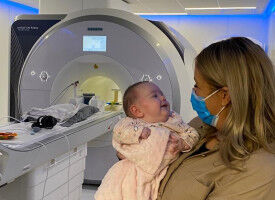
Posted on: 03 February 2026 The research, led by neuroscientists from Trinity, combined brain imaging with artificial intelligence models.
Health - Life Sciences - 02.12.2025
30 distinct genes that influence vitamin D status found
Posted on: 02 December 2025 Trinity researchers have led a new collaborative study, combining large genetic datasets with satellite weather data and uncovering over 30 distinct genes that influence vitamin D status, many of which were not previously known. The study involved collaborators from Maynooth University, the Netherlands, UK, Denmark, Austria, and Germany and is published in the journal Nature Communications.
Life Sciences - Health - 26.11.2025
Mitochondrial mutation rewires immune function
Posted on: 26 November 2025 The scientists have discovered that a single inherited mutation causes whole-body issues in a model of inherited primary mitochondrial disorders after the immune response is sparked into action. Although the scientists stress the research is at a relatively early stage, it is one of the first pieces of work to show that a heritable mitochondrial DNA mutation can independently remodel immune cell function and inflammatory signalling.
Psychology - Life Sciences - 13.11.2025
Link between gut microbiome and autism not backed by science, researchers say
Posted on: 13 November 2025 There's no scientific evidence that the gut microbiome causes autism, a group of scientists argue in an opinion paper publishing today in international Cell Press journal Neuron. They say conclusions from past research that supported this hypothesis-including observational studies, mouse models of autism, and human clinical trials-are undermined by flawed assumptions, small sample sizes, and inappropriate statistical methods.
Health - Life Sciences - 23.10.2025
Stubborn lung infection evolves inside patients over years
Posted on: 23 October 2025 Researchers wanted to know what allows the infection to hang on or come back, and whether it develops new tricks or resistances while living inside the lungs. Researchers at Trinity Translational Medicine Institute (TTMI) and the Irish Mycobacterial Reference Laboratory at St James's Hospital have uncovered how the bacterium Mycobacterium avium -a leading cause of difficult-to-treat chronic lung infections -changes and adapts inside patients over many years of illness.
Life Sciences - 21.10.2025
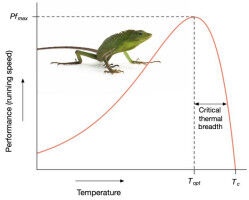
Posted on: 21 October 2025 This "UTPC" seemingly applies to all species and dictates their responses to temperature change. It essentially "shackles evolution" as no species seem to have broken free from the constraints it imposes on how temperature affects performance. All living things are affected by temperature, but the newly discovered UTPC unifies tens of thousands of seemingly different curves that explain how well "species work" at different temperatures.
Life Sciences - Health - 03.10.2025
Creative experiences delay brain aging
Posted on: 03 October 2025 Engaging in creative experiences like music, dance, visual arts, and even specific video games can slow brain aging and promote healthier brain function, says a trailblazing international GBHI study from published in Nature Communications Although creativity has long been celebrated for its cultural and personal value, this study is the first large-scale scientific evidence directly linking creative engagement to direct measurable protection of brain health.
Life Sciences - 17.09.2025
TU Dublin Lecturer Co-Authors Ground-breaking Depression Research Published in Nature Mental Health
We respect your right to privacy. You can choose not to allow some types of cookies. Your cookie preferences will apply across our website. We use cookies on our site to enhance your user experience, provide personalized content, and analyze our traffic. Cookie Policy.
Life Sciences - Health - 15.09.2025
Nanoplastics disrupt brain energy metabolism
Posted on: 15 September 2025 Scientists from the Trinity Biomedical Sciences Institute (TBSI) have discovered how nanoplastics - even smaller than microplastics - disrupt energy metabolism in brain cells. Their findings may have implications for better understanding neurodegenerative diseases characterised by declining neurological or brain function, and even shed new light on issues with learning and memory.
Life Sciences - Health - 26.08.2025

Scientists discover how genetic mutations drive Weaver syndrome, with implications for overgrowth disorders and cancer risk Scientists have discovered how mutations in a specific gene drive the rare developmental disorder Weaver syndrome, which is marked by intellectual disability and overgrowth and predisposes people with the condition to cancer.
Life Sciences - Health - 26.08.2025
UCD co-leads breakthrough discovering genetic mechanism driving Weaver syndrome
Mutations in a single gene are the driving factor behind Weaver syndrome, a rare disorder associated with overgrowth, intellectual disability, and higher cancer risk. In a co-lead study between University College Dublin and Trinity College Dublin, researchers uncovered how mutations in the EZH2 gene upsets critical cellular processes.
Health - Life Sciences - 18.08.2025
Cells in small intestine of coeliac patients communicate with one another
Posted on: 18 August 2025 A new comprehensive atlas of cells fills gaps in knowledge on how different cells in the intestine act together to drive coeliac disease, potentially opening new avenues for future therapeutic intervention Coeliac disease is a long-term autoimmune condition that affects about 0.5% to 1% of people.
Life Sciences - 01.07.2025
Scientists hunt for clues behind the development of curved spines
Scientists from Trinity College Dublin are assessing how the development of spinal ligaments provide mechanical stability and impact postural support in the spine - with a view to better understanding how developmental "missteps" may contribute to spinal deformations, such as the characteristic curved spines that develop in people with scoliosis.
Life Sciences - Health - 23.06.2025
A genomic wormhole - rapidly reorganised genomes likely helped species switch from the sea to the land
A comparative study shows that marine worms shattered their genome and rebuilt it in a radically different form when they first emerged from the sea 200 million years ago. The identified "genomic disorder" mechanism, similar to the one observed in cancer development in humans, could shed light on the evolutionary origin of terrestrial biodiversity and contribute to human health.
Health - Life Sciences - 18.06.2025
Scientists solve 30-year micronutrient mystery, opening door to new medical research
The discovery will help scientists now explore the important role of "queuosine", a microscopic molecule first discovered in the 1970s, in cancer and human health. An international team of scientists, co-led by researchers at Trinity College Dublin and the University of Florida, has cracked a decades-old mystery in human biology: how our bodies absorb a micronutrient that we rely on for everything from healthy brain function to guarding against cancer.
Health - Life Sciences - 21.05.2025
Breakthrough in childhood brain cancer research reveals possible new target for therapies
An international group of scientists has identified a key molecular process that drives a deadly form of childhood brain cancer, potentially offering a much-needed, new therapeutic target. Published in leading international journal Molecular Cell , the new study has revealed how a rare but devastating childhood brain cancer-called Diffuse Midline Glioma (DMG)-hijacks the cell's gene control machinery to fuel its growth.
Life Sciences - Health - 23.04.2025
Remembering the cold: scientists discover how memories control metabolism
New multidisciplinary research led by Prof. Tomás Ryan from Trinity shows that the brain forms memories of cold experiences and uses them to control our metabolism. This newly published study is the first to show that cold memories form in the brain - and map out how they subsequently drive thermoregulation.


