


news
Trinity College Dublin
Results 1 - 20 of 47.
Environment - Life Sciences - 24.02.2026
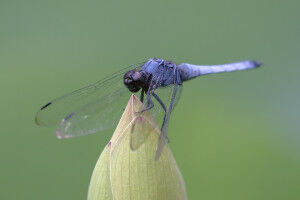
From dragonflies to starfish, new Trinity research shows that the speed of visual perception across the animal kingdom is driven by lifestyle and environment, with fast-paced lives demanding faster vision. Animals don't just see the world differently from one another, they experience time itself at dramatically different speeds.
Health - Life Sciences - 23.02.2026
A landmark ’evolutionary double-bind’ strategy to overcome treatment resistance in prostate cancer
A new study led by researchers from Trinity and the Moffitt Cancer Center shows how radiation therapy can be used to expose-and then eliminate-therapy-resistant cancer cells using natural killer cell immunotherapy. Many patients with metastatic cancers receive therapy that is initially highly effective, often resulting in complete remission.
Health - 20.02.2026
Trauma-informed, gender-sensitive care crucial for women
New Trinity study is first of its kind in Ireland to specifically focus on women to address the disproportionately poor physical health of this population when compared to the general population. A study published by Trinity College researchers from the School of Medicine in the journal BMJ Open , explored the effect of an exercise programme in a Dublin day centre for women who are dealing with challenging issues.
Health - Life Sciences - 19.02.2026
Key immune trigger identified that may be a central player in MS progression
Researchers believe this study further highlights that a key immune system switch warrants full investigation in MS and may be a promising potential target for future MS therapies. Trinity College Dublin researchers have published a new study on MS that has uncovered evidence that a key immune system switch, known as the NLRP3 inflammasome, may play a significant role in the inflammatory processes associated with the pathogenesis of MS.
Environment - Agronomy & Food Science - 05.02.2026

Trinity research shows that depending on how schemes are designed and delivered, wellbeing impacts can be positive or negative. Time spent in nature and peer discussion groups are key to fostering positive wellbeing outcomes. While AESs are a familiar part of modern farming they typically focus on environmental outcomes such as biodiversity and climate action.
Life Sciences - 03.02.2026
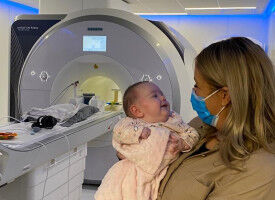
Posted on: 03 February 2026 The research, led by neuroscientists from Trinity, combined brain imaging with artificial intelligence models.
Health - 19.12.2025
How many cervical cancers have been prevented so far through screening in Ireland?
Posted on: 19 December 2025 The team has uncovered that the Irish Cervical Cancer Screening programme has prevented over 5500 cancers in Ireland, that would over wise have occurred in the lifetime of women screened. The outcomes figured by the team give a solid support for the clear efficacy of cervical cancer screening in Ireland and beyond.
Agronomy & Food Science - Environment - 04.12.2025
Increasing plant diversity in agricultural grasslands boosts yields, reducing reliance on fertiliser
Posted on: 04 December 2025 Higher plant diversity in agricultural grasslands increases yields with lower inputs of nitrogen fertiliser. That is the headline finding of a landmark, international study led by Trinity that paints a promising picture for more sustainable agriculture. And in further good news, the research shows that under warmer temperatures, the yield benefits of more diverse grasslands further increase.
Health - Life Sciences - 02.12.2025
30 distinct genes that influence vitamin D status found
Posted on: 02 December 2025 Trinity researchers have led a new collaborative study, combining large genetic datasets with satellite weather data and uncovering over 30 distinct genes that influence vitamin D status, many of which were not previously known. The study involved collaborators from Maynooth University, the Netherlands, UK, Denmark, Austria, and Germany and is published in the journal Nature Communications.
Life Sciences - Health - 26.11.2025
Mitochondrial mutation rewires immune function
Posted on: 26 November 2025 The scientists have discovered that a single inherited mutation causes whole-body issues in a model of inherited primary mitochondrial disorders after the immune response is sparked into action. Although the scientists stress the research is at a relatively early stage, it is one of the first pieces of work to show that a heritable mitochondrial DNA mutation can independently remodel immune cell function and inflammatory signalling.
Social Sciences - 20.11.2025
Humans bring gender bias to their interactions with AI - new study
Findings have major implications for design, use, and regulation of interactive AI systems Humans bring gender biases to their interactions with Artificial Intelligence (AI), according to new research from Trinity College Dublin and Ludwig-Maximilians Universität (LMU) Munich. The study involving 402 participants found that people exploited female-labelled AI and distrusted male-labelled AI to a comparable extent as they do human partners bearing the same gender labels.
Pharmacology - Health - 14.11.2025
Transforming Care: collective research leads the way in tackling multimorbidity
Posted on: 14 November 2025 A comprehensive programme of new research from the Health Research Board (HRB) Collaborative Doctoral Award (CDA) in Multimorbidity has provided crucial insights and evidence-based solutions to improve healthcare and outcomes for people living with multiple long-term conditions (multimorbidity).
Psychology - Life Sciences - 13.11.2025
Link between gut microbiome and autism not backed by science, researchers say
Posted on: 13 November 2025 There's no scientific evidence that the gut microbiome causes autism, a group of scientists argue in an opinion paper publishing today in international Cell Press journal Neuron. They say conclusions from past research that supported this hypothesis-including observational studies, mouse models of autism, and human clinical trials-are undermined by flawed assumptions, small sample sizes, and inappropriate statistical methods.
Health - 11.11.2025
Study suggests speaking more languages might keep you younger
Posted on: 11 November 2025 An international study led by Agustín Ibáñez and co-authors reveals that speaking multiple languages may slow the biological processes of aging and protect against age-related decline. Multilingualism protects against accelerated aging in cross-sectional and longitudinal analyses of 27 European countries Can learning another language help you stay younger for longer?
Health - Pharmacology - 31.10.2025
Redefining pneumonia and sepsis care
Posted on: 31 October 2025 Two landmark international studies led by Professor Ignacio Martin-Loeches have been recently published in The Lancet and Nature Medicine - placing Irish critical care research firmly on the global stage.
Health - Life Sciences - 23.10.2025
Stubborn lung infection evolves inside patients over years
Posted on: 23 October 2025 Researchers wanted to know what allows the infection to hang on or come back, and whether it develops new tricks or resistances while living inside the lungs. Researchers at Trinity Translational Medicine Institute (TTMI) and the Irish Mycobacterial Reference Laboratory at St James's Hospital have uncovered how the bacterium Mycobacterium avium -a leading cause of difficult-to-treat chronic lung infections -changes and adapts inside patients over many years of illness.
Health - Pharmacology - 22.10.2025
No benefit of ketamine for patients hospitalised with depression, clinical trial reports
Posted on: 22 October 2025 Researchers from Trinity College, St Patrick's Mental Health Services, Queen's University Belfast, Ireland, investigate use of twice-weekly ketamine infusions as an add-on treatment for inpatients with serious depression Findings from a randomised and blinded clinical trial investigating repeated ketamine infusions for treating depression have revealed no extra benefit for ketamine when added onto standard care for people admitted to hospital for depression.
Life Sciences - 21.10.2025
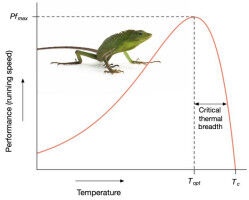
Posted on: 21 October 2025 This "UTPC" seemingly applies to all species and dictates their responses to temperature change. It essentially "shackles evolution" as no species seem to have broken free from the constraints it imposes on how temperature affects performance. All living things are affected by temperature, but the newly discovered UTPC unifies tens of thousands of seemingly different curves that explain how well "species work" at different temperatures.
Health - Pharmacology - 09.10.2025
Could targeted steroid use offer a universal complimentary treatment to fight TB?
Posted on: 09 October 2025 Researchers wanted to understand how steroids selectively affect human macrophages, which are a key cellular player in the immune response to Mycobacterium tuberculosis (Mtb); the bacteria which causes TB. Tuberculosis (TB) remains a major global health challenge, affecting over 10 million people annually worldwide, with 1.25 million people dying of TB every year.
Astronomy & Space - Chemistry - 03.10.2025

Astronomers have detected the explosive, highly toxic gas phosphine (PH3), in the atmosphere of an ancient brown dwarf (Wolf 1130C) located 54 light-years from the Sun in the constellation Cygnus. Phosphine has long been recognised as a possible biosignature for anaerobic life, given that there are few natural sources in terrestrial planet atmospheres.


